Clean energy journalism for a cooler tomorrow

This novel power line could link 3 grids across 3 time zones

North Plains Connector has earned backing from the Energy Department and utilities, and could deliver huge cost and reliability benefits — if states give it the OK.
By Jeff St. John

  • Link copied to clipboard
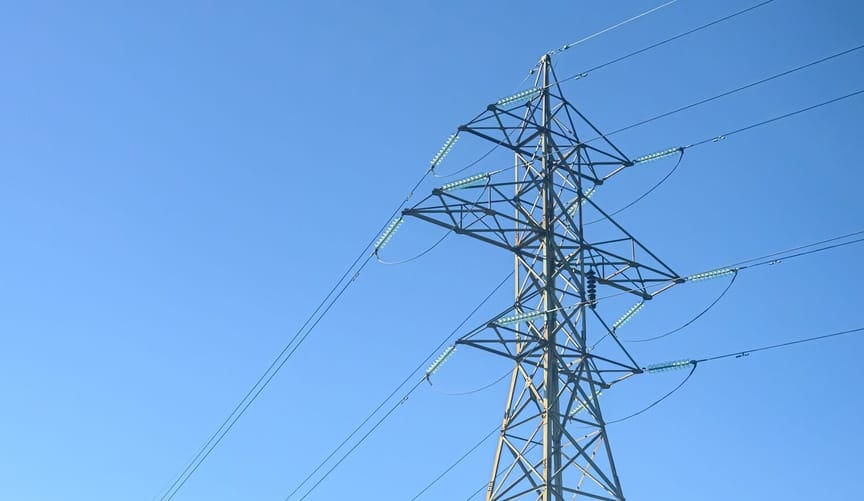
Transmission tower and a blue sky
(Roberto Machado Noa/LightRocket via Getty Images)

Michael Skelly knows it’s hard to build a huge transmission line that connects different regions of the grid. He has spent a decade trying to get one up and running.

But Skelly, now CEO of Grid United, thinks his current attempt to build a first-of-its-kind transmission line is on the right track. And he’s gotten a consortium of utilities from Minnesota to Oregon, and officials in the U.S. Department of Energy through both the Biden and Trump administrations, to back it up.

Grid United’s North Plains Connector will be a 420-mile, 3-gigawatt high-voltage direct current (HVDC) link between Montana and North Dakota. It will require an estimated $6 billion in investment across both states, and won’t be completed until 2032 at the earliest.

When it’s done, North Plains Connector will be able to share power between three grid regions spanning three time zones across the U.S. West, Great Plains, and Upper Midwest. Today, such region-spanning connections are extremely rare. But study after study has shown they can yield major benefits that extend far beyond the states the line transects.

If you connect two grids whose peak moments are at two different times, you create an ability for the grids to lean on one another,” Skelly said. 

A map of the North Plains Connector project showing how it interconnects WECC, SPP and MISO regional grids
A map of the North Plains Connector project indicates how it will link the regional grids of the Western Electricity Coordinating Council (WECC), the Southwest Power Pool (SPP), and the Midcontinent Independent System Operator (MISO). (Grid United)

The reliability and cost benefits that could flow from linking entire regions are almost certainly substantial. But it’s hard to quantify all the good that can come from such links when they have never existed before — and utilities and regulators want to be able to clearly define long-term benefits before they approve major investments.

Grid United’s solution is to front the costs for getting the project off the ground while trying to convince utilities to join in paying for a portion. Financing from the DOE is helping immensely with navigating these early costs and risks — and in getting utilities on board.

Back in 2024, the DOE awarded a $700 million grant to the consortium, including Grid United and the Montana Department of Commerce, which is the lead agency for administering the award. And last week, the DOE published a final environmental impact statement for the project, helped along by a federal interagency process launched under the Biden administration.

The Trump administration has continued to work with Grid United, even as it has clawed back or delayed billions of dollars in other Biden-era grants and terminated a $4.9 billion DOE loan for the Grain Belt Express, another massive HVDC line meant to carry wind and solar energy from the Great Plains to states farther east.

For North Plains Connector, having that federal money available is quite helpful to the utilities that are participating in the project as they go through regulatory approvals,” Skelly said. Regulators want their states to get their fair share, if you will — and they also want customers whose utilities are paying for the project to not have to pay for the whole thing.”

This combination of the DOE and Grid United taking on the early costs and risks has given a growing list of utilities enough confidence to make at least conditional commitments to pay for a piece of the project once it’s finished.

Some of them are directly involved in the states where it’s being built, such as Minnkota Power Cooperative and NorthWestern Energy. While others — such as Allete Energy and Great River Energy in Minnesota, Portland General Electric in Oregon, and Puget Sound Energy in Washington state — are joining up to earn a share of the reliability and cost benefits that will flow indirectly from the project and across the grid regions it will link.

Those far-off utilities don’t need to draw power directly from the end points of the HVDC line to gain the benefits, said Gretchen Kershaw, chief operating officer at consultancy Grid Strategies, which is not involved in the project. That’s because HVDC lines enable two-way flows of power that can energize and backfill shortfalls across entire regional grid networks.

Being able to tap into generation well beyond their borders makes it easier for utilities to deal with disruption or demand spikes caused by intense weather events like winter storms or heat waves. That’s one of the benefits cited for North Plains Connector in last month’s draft National Transmission Needs Study, the most recent in a series of DOE reports highlighting the value of these kinds of interregional connections.

The most reliable and resilient system will have diversity in generation supply, both in terms of types of generation and location,” said Kershaw, who previously worked as a senior adviser to the DOE’s Grid Deployment Office, which was the source of the North Plains Connector grant but disbanded by the Trump administration last year. You’re essentially able to make the system bigger, with generators and customers on both sides, and weather systems that are different at both ends.”

Those are some of the benefits that drew Allete to partner on the North Plains Connector project in 2023.

We knew this energy transformation happening in our nation is going to require people to go well beyond the boundaries of their previous business and service territories,” said Julie Pierce, vice president of strategy and planning for the utility and energy company.

Allete owns Minnesota Power, a utility serving about 150,000 customers, as well as renewable energy subsidiaries including wind farms in North Dakota, which happen to be connected with a decades-old HVDC line to its Minnesota territory.

Allete is also part of a group of utilities that developed a large-scale, multi-utility grid-expansion plan in the early 2000s, which helped lay the groundwork for billions of dollars in additional regional transmission buildouts in the Midwest, Pierce said.

A key step in convincing other utilities to sign on is figuring out how to measure the new interregional line’s resource adequacy value. That’s the term of art for how utilities ensure they can keep their grids running during times of high demand, power plant outages, severe weather, or other emergencies.

It’s so massive, it’s hard to put boundaries around what it’s going to enable,” Pierce said. How do you value the ability to keep lights on in the Upper Midwest when there’s a storm coming through, but you’re able to import that solar from California?”

That work has some clear starting points, she said. Utilities can start to incorporate the reliability value of their share of the line into the integrated resource plans they file with state regulators, which lay out how much new generation and grid investment they need to make over the next decade or more.

North Plains Connector has its work cut out for it beyond measuring resource adequacy. Before it can break ground, it must make agreements with landowners along the path of the line, secure state and local permits, and win final regulatory approvals from both states it passes through.

These projects take many years to put together,” Skelly said.

Indeed, high-profile transmission lines like the SunZia project from New Mexico to California and the Champlain Hudson Power Express from Canada to New York City have taken more than a decade from inception to completion. Many transmission projects fail to overcome hurdles. Skelly’s previous company, Clean Line Energy Partners, shut down in 2019 after failing to complete five power lines to carry 16.5 GW of wind power across the Midwest.

But if North Plains Connector can get connected, the project will be online for 30 years,” he said. What does generation in America look like in 2050? I don’t know. But it’s very likely we have very different demand profiles in each system, and whatever generation we have in that time, we’ll be better able to optimize if we have a great grid to lean on.” 

This signup form requires necessary cookies.

Allow marketing cookies to load the newsletter signup form.

Jeff St. John is chief reporter and policy specialist at Canary Media. He covers innovative grid technologies, rooftop solar and batteries, clean hydrogen, EV charging, and more.