

Permitting reform is a big, controversial bet for the energy transition
Clean energy backers say the bill would boost renewables and the power grid more than it would help fossil fuels. Some environmentalists fear they’re dead wrong.

The Senate bipartisan permitting bill is essentially an enormous three-part bet by the Democrats and clean energy advocates who support it.
The first part of the bet is that streamlining federal environmental reviews and permitting processes for all energy infrastructure will lead to more clean than dirty energy getting built, because renewables are cheaper and faster to get up and running.
The second is that the Trump administration will follow through on commitments to stop blocking clean energy — and that it won’t take advantage of the changes to fast-track a bunch of dirty projects that a future administration would struggle to overturn.
The third is that there will not be a better opportunity to initiate reforms that must be put in place for the economy to successfully decarbonize.
Not everyone thinks these bets will pay off for the climate. The Bipartisan American Affordability and Jobs Act, which the Senate is expected to vote on this week, has sown divisions between some historic allies for decarbonization policy.
Influential climate groups including the Natural Resources Defense Council, the Sierra Club, and the Union of Concerned Scientists have come out against the bill over concerns that it will make it too easy to build new fossil fuel infrastructure. After all, the American Petroleum Institute is one of the bill’s backers, and the Trump administration — as clear a friend to fossil fuels and foe to clean energy as there is — has given its blessing to the current version.
But many climate policy advocates and analysts contend that the bill is a clear positive for the energy transition. BAAJA was co-written by Democratic Sens. Martin Heinrich of New Mexico and Sheldon Whitehouse of Rhode Island, two of clean energy’s loudest supporters in Congress. It has broad support: Clean energy industry groups, labor unions, and some previously on-the-fence environmental organizations have come out in favor of it.
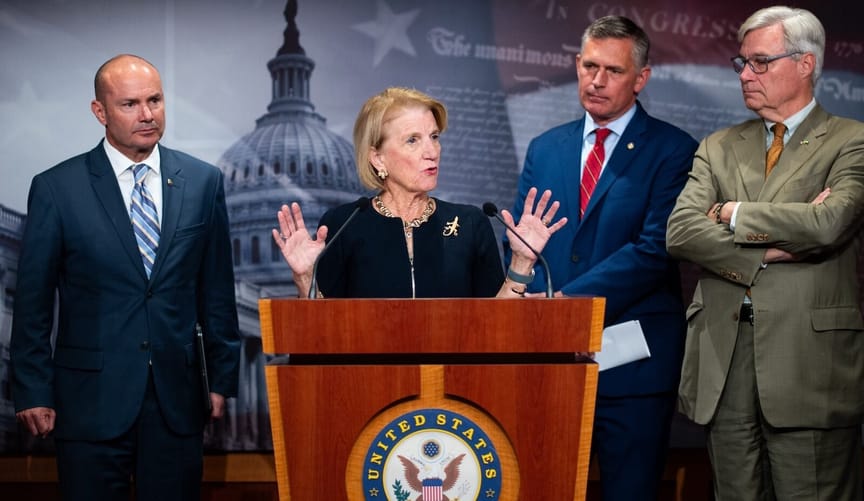
“Let’s make it possible for America to build big things in this country again,” Heinrich said during a press conference with Whitehouse and other supporters last week.
The core contention of BAAJA backers is that the barriers to clean energy are no longer financial — they’re institutional. Decades of policies designed to protect the public and the environment from harmful infrastructure development, including fossil fuel pipelines and power plants, have become barriers to building the things needed to decarbonize.
“Financial incentives only work if the things it makes financial sense to build can get permitted,” said Jesse Jenkins, an associate professor and energy systems engineer at Princeton University. “If we can’t build clean energy infrastructure at speed and scale, we can’t decarbonize the United States economy.”
High-voltage transmission lines are the most obvious bottleneck.
Jenkins’ work on Princeton’s Net-Zero America project and with the university’s REPEAT Project shows the U.S. must double to triple its current transmission capacity to decarbonize its grid by the mid-2030s. Absent changes to the regulatory hurdles that delay these projects, there is no way the U.S. will achieve that pace. As a case in point, Heinrich singled out the SunZia transmission line, which has enabled a massive New Mexico wind farm to deliver power to Arizona and California, but which took 18 years to complete.
For years, permitting reform bills — including several prior bipartisan packages — have foundered over disputes between Republicans demanding pathways to streamline fossil fuel projects and Democrats insistent on retaining existing protections. Meanwhile, thousands of clean energy projects have remained stuck in grid interconnection queues.
“I think there has been a reliance on litigation to stop bad projects. But that reliance has also created a permitting structure where today, even for really good projects, they still get litigated, and so power lines take 15 to 20 years to build,” Heinrich said in last week’s press conference. “Changing that is hard, and it means that organizations are going to have to reevaluate the best way to move the clean energy transition forward.”
But, he added, “If we can create an open, competitive, level playing field, clean is cheap, and cheap wins in the marketplace.”
At present, this argument appears to be carrying the day in the Senate. The bill cleared a key procedural hurdle on Nov. 9 on a 73–25 vote, and then on Monday the Senate voted 70–27 to end debate on the amended version of the bill. A vote on final passage is likely to come before Thanksgiving, and then the bill would move to the House of Representatives.
The root of BAAJA opposition
Climate-minded opponents of BAAJA simply believe that the risks of the bill outweigh the rewards.
Yes, it will make it easier to build clean power and transmission — things these opponents support — but it will also make it easier to build fossil fuel infrastructure. There’s no guarantee, they point out, that the new clean energy will offset the new dirty energy.
Energy modelers are split on whether the bill’s changes to permitting and limits to legal challenges would end up driving more clean power than dirty power or vice versa.
An analysis from energy think tank Rhodium Group found that the bill would lead to an overall reduction in greenhouse gas emissions through 2040, based on its assumption that expanded transmission capacity and streamlined development timelines would enable up to nearly 250 gigawatts of additional clean energy to be brought online.
But an analysis from Kevin Kircher, an associate professor of engineering at Purdue University, found that the bill would increase emissions on balance, as demand for fossil gas power plants and pipelines — largely to power data centers — would outpace clean energy growth.
Specifically, opponents warn that the bill’s modifications to bedrock federal environmental regulations in laws including the Federal Power Act, the Clean Water Act, the Endangered Species Act, and the National Environmental Policy Act will let bad actors ram through harmful infrastructure projects against the public interest.
These changes could give Trump a “loaded howitzer,” according to former Biden administration senior climate adviser John Podesta, to lock in environmentally harmful projects.
Heinrich and Whitehouse insist that critics have misstated this risk.
“If you don’t follow the law, the permit can be overturned,” Heinrich said at a Washington, D.C., event last week hosted by Heatmap News.
Lena Moffitt, executive director of Evergreen Action, a climate advocacy group that’s come out in favor of BAAJA, said the attorneys advising her organization have assured her that amendments made last week minimize these lock-in risks.
Nevertheless, Earthjustice Action President Abigail Dillen said last Monday that the nonprofit group’s analysis of the amended bill finds it would still allow Trump to “rush through irreparably harmful projects,” and would “still constrain any future president from repairing the damage.”
This is not the only point of criticism. Native American advocacy groups say the bill would weaken tribes’ ability to fight projects like the Dakota Access Pipeline. Climate journalist Bill McKibben warned the bill could undermine legal methods used by communities and state governments to challenge data centers and immigration detention facilities, although the bill does contain provisions that would significantly increase what new data centers must pay for the grid infrastructure required to supply them with the power they need. And some worry the bill’s “permit certainty provisions” won’t be enough to stop Trump’s crusade against offshore wind projects.
“It is profoundly shortsighted for the clean energy community to ally with the data center and fossil fuel industries,” Danny Cullenward, a noted climate researcher and senior fellow at the University of Pennsylvania’s Kleinman Center for Energy Policy, told Canary Media in an email. “I urge those who appreciate how this bill could transform the grid to consider the damage it has already done to working relationships among key constituencies.”
There is no denying that BAAJA’s changes to federal policy will streamline permitting for fossil fuel pipelines along with power lines, as well as mass transit projects like high-speed rail and other much-needed public infrastructure, Evergreen Action’s Moffitt said. That’s a hard pill for her to swallow, given her “career mostly fighting pipelines for 15 years and working with communities to slow down projects,” she said.
But even with that in mind, she said, “the laws we have now have not stopped fossil infrastructure in a way commensurate with the climate crisis we have to deal with — but they have stopped clean energy.”
As for fears that the Trump administration will abuse the law’s powers to ram through dirty power and destructive projects, Princeton’s Jenkins, who supports the bill, noted that “Trump doesn’t need permitting reform to be lawless and jam things through.” To the contrary, BAAJA’s permitting certainty provisions could “restrain the degree of arbitrariness that the executive can utilize,” he said.
Planning for a future beyond the next election
Heinrich emphasized that the progress that BAAJA would unlock won’t happen overnight. “I don’t think this bill will measurably change what this president can accomplish, because it’s going to take multiple years” to enact, he said at the Heatmap event.
There’s no way around the fact that building the grid that the U.S. needs to enable more clean, cheap, and reliable energy will be hard no matter what. But BAAJA backers argue that failing to act now is more likely to lead to being stuck with the unacceptable status quo.
“We think we should pass this bill right now, and if there are broader concerns that the next Congress wants to take up, then we can do that,” Dylan Reed, head of federal and political affairs for clean energy trade group Advanced Energy United, said in a postelection media event. “But we shouldn’t delay and wait another one to two years before we move forward.”
Daniel Palken, director of infrastructure for energy and permitting at pro-climate philanthropy Arnold Ventures, seconded that perspective in a podcast last week with David Roberts, Canary Media’s editor-at-large.
If Republicans retake control in the early 2030s, “you could expect anything Democrats did through purely partisan legislation — only the things they liked and none of the things Republicans liked — to get reversed.”
And that would be antithetical to the whole point of permitting reform, “which is creating certainty, so that industry actors have long time horizons and a stable business environment in which to put money into projects and move them forward,” Palken said. “So I really think it’s a mirage to imagine that any permitting reform can pass without true bipartisan consensus.”
Jenkins agreed that successful permitting reform will “never be just about the technologies climate advocates favor.” But “to win on climate, a policy victory like this is necessary somewhere along the line,” he said. ”Let’s win this, and then move on to the next fight.”
Jeff St. John is chief reporter and policy specialist at Canary Media. He covers innovative grid technologies, rooftop solar and batteries, clean hydrogen, EV charging, and more.


