

North Carolina utility regulators punt on clean transition tariff — again
The mechanism would allow tech companies to build their own renewables, but the Utilities Commission has dragged its feet on directing Duke to come up with a plan.

For big corporations in North Carolina with ambitious climate goals, the clean transition tariff is becoming something of a white whale.
Tech firms and other large electricity consumers have long sought this special rate structure because, across most of the state, they can buy electricity only from Duke Energy, a vertically integrated monopoly utility. A clean tariff would let them contract for their own renewable electrons using Duke as a go-between, without violating the law.
In spring 2024, Duke announced its intention to pursue such a plan but never followed through. Earlier this year, the company said it would evaluate the clean tariff “in good faith,” but made no commitments.
Last month, the whale got closer than ever, when Duke said it would definitely begin negotiations on a clean tariff in early 2027. Proponents of the policy urged state officials to back up that pledge with an order and an enforceable deadline. They hoped that such a directive would be tucked somewhere in the hundreds of pages of regulatory decisions issued last week.
It was not.
Instead, the state Utilities Commission, a five-member panel controlled by Republicans, offered encouragement.
“The Commission declines at this time to direct Duke to file or propose a clean customer tariff,” its Nov. 16 order said. “The Commission nevertheless recognizes Duke’s representation that it remains willing to collaborate with interested parties. … [It] encourages Duke to work with the interested parties to work on a proposal for a Clean Transition Tariff.”
Steve Levitas, a longtime clean energy lawyer — and, briefly, a commissioner himself — welcomed the verbiage but called it insufficient.
“This issue is just too important to leave to Duke’s discretion,” said Levitas, now the interim executive director of New Energy Economics, a nonprofit that provides expert testimony in state regulatory proceedings.
Levitas testified this year on behalf of the Corporate Energy Buyers Association, whose 300-plus business members run the gamut from hospitality to manufacturing to tech companies.
“All CEBA and many other interveners asked the commission to do was to require Duke to file a new, voluntary customer program,” Levitas said. “That wasn’t really a huge ask.”
The snub from regulators came on the same day that they approved Duke’s request to raise household rates by about 9.5% in the next two years and to establish special terms of service for data centers. The new rules provide some protections for average customers, consumer and clean energy advocates believe, but a clean transition tariff would offer more.
“One thing that is clear from the election is that one of the biggest concerns of the public — and of many elected officials — is ensuring that data centers do not impose any energy costs on the ratepayers,” Levitas said. “The only way to really do that is to make the data centers pay directly for the generation that they require.”
Duke does have a suite of programs called Green Source Advantage Choice for large business customers that want to contract for their own clean energy in the state, but these programs have largely flopped. Not one large customer has applied for the utility’s “resource acceleration option,” which ostensibly speeds up the addition of solar fields to the Duke grid.
Corporations with aggressive clean energy goals say that’s because those carbon-free electrons could have connected to the grid without them. (To verify their sustainability claims, they need to show they aren’t simply paying for renewables Duke is already developing.)
“There isn’t really a viable pathway that works for a majority of these large loads that are coming to this state, for them to be able to credibly say, ‘We’re coming to your community. We are bringing this clean energy,’” Katie Southworth, a deputy director at CEBA, explained in a recent webinar.
While no party has outright objected to a clean transition tariff, the state-sanctioned customer advocate, Public Staff, has expressed doubts. Those include the difficulty of designing such a program and ensuring that average customers don’t end up footing the bill for expensive solar projects. In last week’s order, the commission reiterated those critiques at length.
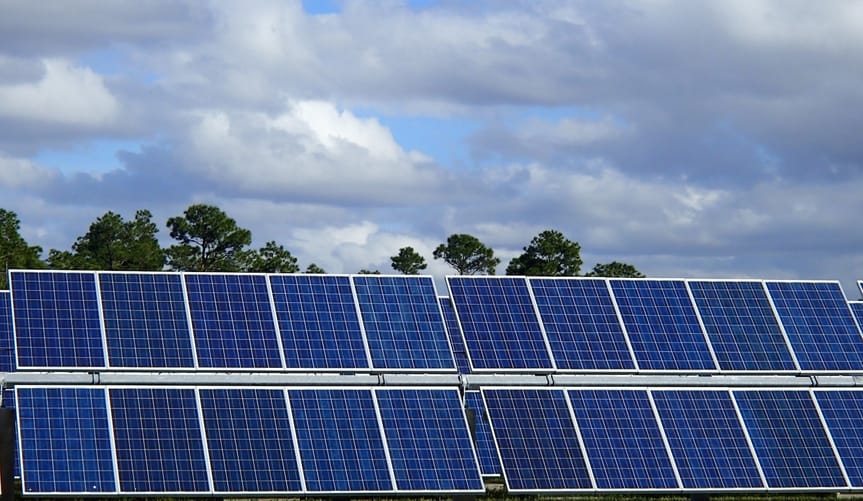
But similar challenges have been overcome in other vertically integrated markets. Google helped enact a clean transition tariff in Nevada and is pursuing ones in Indiana and Minnesota. Georgia Power has a “customer identified resource” program that allows large customers to work with developers to propose and pay for new solar projects.
Commissioner Floyd McKissick, a Democrat who’s served on the panel since 2019, told Canary Media, “I’m optimistic that Duke and the stakeholders will be able to craft a proposal that will receive serious consideration by the commission.” He added: “Obviously, Green Source Advantage has not worked.”
The midterm elections have also led to renewed optimism that state lawmakers could simply require a clean tariff outright.
After more than a decade in the minority, Democrats will control the state House of Representatives next year and be one seat shy of a majority in the state Senate. Meanwhile, Gov. Josh Stein, a Democrat, has created a bipartisan energy-policy task force that is expected to issue a set of proposals in February.
“There’s a high likelihood that it will make recommendations regarding a voluntary customer program or clean transition tariff or bring your own generation,” said Levitas, who serves on the task force with advocates, legislators, and other experts. “So, I wouldn’t be at all surprised if we see legislation introduced on this subject in the session next year.”
Elizabeth Ouzts is a contributing reporter at Canary Media who covers North Carolina and Virginia.


